
Tesla y los límites de la fiabilidad
By Enrique Dans
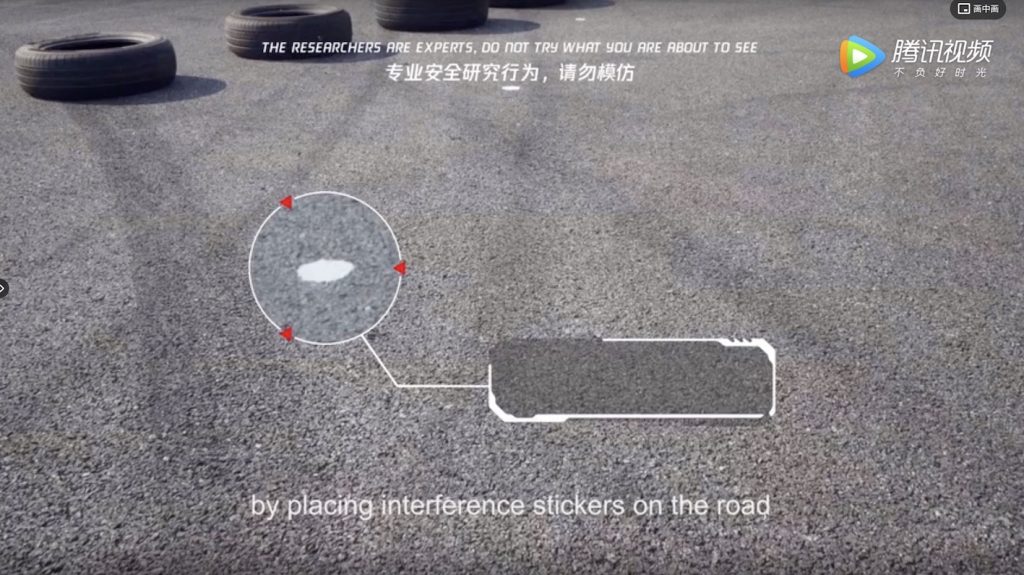
Linda Baker, de Freight Waves, me contactó por correo electrónico para preguntarme acerca de los hacks llevados a cabo por Keen Security Lab, un laboratorio de seguridad perteneciente al gigante chino Tencent, sobre los sistemas de asistencia a la conducción de vehículos Tesla, tales como engaños al sistema de control de los limpiaparabrisas o al control de cambio de carril, y el pasado día 3 publicó un artículo titulado “Researchers trick Tesla Autopilot using stickers on the road“ (pdf) en el que me cita.
Los hacks en cuestión, tales como mostrar a la cámara frontal del vehículo una serie de imágenes y conseguir que el mecanismo del limpiaparabrisas las identifique como tiempo lluvioso o, más peligroso, situar tres pequeñas pegatinas blancas en una carretera y hacer que el vehículo cambie de carril, son sin duda muy interesantes y pueden llevar a que Tesla se plantee como protegerse ante semejantes eventualidades, pero como tales, no suponen un cuestionamiento de la seguridad de los vehículos de la compañía como tal, ni tiene sentido que cualifiquen para su bug bounty program, que es la razón por la que se han convertido en noticia.
Ningún sistema puede protegerse contra toda posible eventualidad, y en algún sitio hay que poner el límite. Como comenté con Linda, poner pegatinas en una carretera para engañar a un vehículo es más una booby trap o una argucia de Wile E. Coyote que una posible circunstancia real de conducción, aunque en efecto, podría llegar a darse el caso de que alguien se plantease llevarlo a cabo y, como tal, merezca un cierto nivel de atención. Pero por más que lo intentemos, nunca vamos a llegar a proteger a un sistema contra todas las ocurrencias de un experto en seguridad, y el límite, desde mi punto de vista, está en la modificación del entorno.
A continuación, como hago habitualmente, el texto completo de las preguntas y respuestas que crucé con Linda:
P. How reputable is Tencent?
R. Tencent is a huge Chinese multinational investment holding conglomerate founded in 1998, one of the largest corporations in China. Tencent is the world’s largest gaming company, one of the world’s most valuable technology conglomerates, one of the world’s largest social media companies (the Chines social network and portal QQ among others), and one of the world’s largest venture capital firms and investment corporations. Its services include social networks, music, web portals, e-commerce, mobile games, internet services, payment systems, smartphones, and multiplayer online games, which are all among the world’s biggest and most successful in their categories. Keen Security Lab is one of the important constituent parts of Tencent Security, and focuses on the cutting-edge security research of mainstream PC/Mobile operating systems, applications, cloud computing technologies, IOT smart devices, etc.
P. How significant are Tencent’s findings about being able to commandeer the Tesla steering system and confusing the lane identification system?
R. Changes and alterations to the physical environment are generally considered outside the scope of attacks against self-driving systems. The designers of a system cannot anticipate all the possible artificial changes that could be made to the environment in order to trigger a certain behavior.
P. Tesla says this report is not eligible for their bug bounty program. Are the bug bounty programs sufficient to detect software bugs, especially in self-driving vehicles?
R. Bug bounty programs are highly recommendable to introduce external takes on problems and issues. Paying people to troubleshoot computer systems is now considered an increasingly important part of organizations’ security, and they are important in terms of both effectiveness and reputation. However, the issue discovered by Tencent Keen Security Lab is not a bug, not a problem with the software or a limitation of the hardware, but the purposefully modification of a road, more akin to a booby trap. The findings are interesting and might merit some actions from Tesla in order to improve the vehicle’s behavior under certain circumstances, but changes and alterations to the physical environment are generally considered outside the scope of attacks against self-driving systems because it would be extremely difficult to set a proper limit for this type of interventions.
Puedes leer el artículo completo en: : Tesla y los límites de la fiabilidad
